

After breaching the historic $100 barrier and touching $117.75, silver continues its relentless climb. On the Shanghai exchanges, silver has scaled $130. At Rs 3 lakh plus surge per kg in Indian cities, the white metal is defying gravity—and all predictions of a correction.
The silver bulls were right all along. While analysts warned of “mean reversion risk” and cautioned that “current levels are not favourable for fresh investments,” the white metal has simply kept climbing. After making history by breaching the $100per ounce barrier for the first time ever in mid-January 2026, silver touched an all-time high of $117.75 on January 27 on the Shanghai exhanges. It’s up a staggering 270%+ from just over $31 an ounce in January 2025.
On Indian exchanges and retail markets, the rally has been equally breathtaking. Silver spot prices in India are trading around Rs 3.17 lakh per kg, and higher while physical silver prices in cities like Coimbatore have surged to Rs 375 per gram—translating to Rs 3.75 lakh per kilogram. That’s an 18% jump in January alone and represents more than a threefold increase from last year’s levels around Rs 85,000 per kg.
MCX silver futures for March 2026 delivery are hovering near Rs 3.35 lakh per kg, reflecting the massive premium physical buyers are willing to pay to secure the metal. What was supposed to be a vulnerable, correction-prone rally has instead morphed into “a parabolic climb” that’s “pushing deeper into uncharted territory,” as traders watch in amazement.
The metal that analysts warned in early January was “more vulnerable to profit booking” after its “extraordinary rally” has instead added another 10-15% in the weeks since that warning. Silver has surged roughly Rs 40,000-45,000 per kilogram in just the past week, according to market data from Indian cities.
The Deficit Story Wins
The market got one thing right: silver’s fundamentals. But they underestimated just how powerful those fundamentals would prove. According to ICICI Direct’s January 7 outlook, “silver market is likely to remain in deficit for 6th consecutive year,” with 2025’s shortfall estimated around 118 million ounces. That persistent structural shortage is asserting itself – and how.
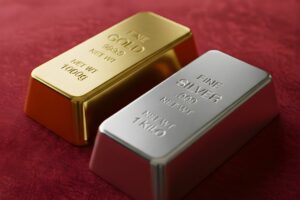
Rising prices have paradoxically “spurred robust retail demand in key markets such as China and India, with investors increasingly turning to 1-kilogram silver bars,” according to market reports. In India, the surge in physical prices—from Rs 2.77 lakh per kg a week ago to Rs 3.17 lakh now—hasn’t deterred buyers. Instead, it seems to be creating a buying frenzy.
Chinese manufacturers have reportedly shifted production from silver jewelry to investment products to meet the surge in demand—a remarkable development that suggests the investment narrative has overwhelmed price resistance concerns.
“US tariff uncertainty has led the flow of metal from London to US triggering historic squeeze, leading decline in available silver stocks in London,” ICICI Direct noted in a January report. That squeeze hasn’t eased—it’s intensified. COMEX inventories remain at elevated levels as metal continues flowing to the US, while LME stocks have been “diminishing persistently.”
Trump, Powell, and the Debasement Trade
If silver’s supply-demand fundamentals provided the foundation, geopolitical chaos and monetary policy uncertainty have built the skyscraper on top. President Donald Trump’s actions since returning to the White House have created exactly the environment where precious metals thrive.
“Silver surged more than 6% to above $110 per ounce on Tuesday, extending its record run as geopolitical and trade risks, along with investor flight from sovereign bonds and currencies, boosted safe-haven demand for precious metals,” Trading Economics reported. Trump’s threat to raise tariffs on South Korean goods from 15% to 25%, his 100% tariff threats against Canada, and escalating tensions with China have all fueled safe-haven buying.
But the real accelerant has been Trump’s renewed criticism of Federal Reserve Chair Jerome Powell and “expectations that Trump will replace Federal Reserve Chair Jerome Powell with a more dovish candidate,” which have “bolstered market bets on future rate cuts, further underpinning safe-haven flows into precious metals.”
ICICI Direct had identified “Concerns over Fed Independence” as a key support factor for gold in their January outlook, but few anticipated how quickly those concerns would intensify. Fed Chair Powell’s term ends in 2026, and speculation about his replacement with a more politically compliant candidate has raised fears about “fiscal dominance”—the subordination of monetary policy to government financing needs.
This dynamic has fueled what traders call the “debasement trade”—investors shifting “from bonds and currencies into real assets amid growing unease over heavy fiscal spending in major economies.” Silver and other precious metals have become the beneficiary of a fundamental loss of confidence in fiat currencies and government bonds.
With gold crossing the historic $5,000 per ounce mark and having “risen 15% so far in 2026,” silver’s rally is part of a broader precious metals phenomenon. The white metal is simply the higher-beta play on the same macro themes. In India, gold futures are trading near Rs 1.62 lakh per 10 grams, supported by a weak rupee and investors seeking safe havens.
The Surprise That Wasn’t
Here’s where the bears got it most wrong: industrial demand analyts warned that “demand for silver in industrial segment is expected to flatten this year after making series of record high in last 4 years amid global economic uncertainty and potential thrifting due to soaring silver prices.”
That flattening hasn’t materialized—yet. The photovoltaic sector continues absorbing silver despite high prices, accounting for roughly 29% of industrial demand according to ICICI data. Electronics demand remains strong at 68-69% of industrial usage. Even the jewelry sector, which was “expected to decline by 6% and 15%,” is showing resilience in key markets like India where weddings and festivals drive consumption regardless of price.
The “thrifting” phenomenon—where manufacturers reduce silver content to save costs—may be happening at the margins, but it’s being overwhelmed by overall demand growth. Clean energy transitions, data center construction, electric vehicle production, and grid modernization all require silver.
“Silver’s use in AI chips, data center cooling, and power distribution” continues expanding, providing structural support that wasn’t fully appreciated when analysts made their cautious forecasts in early January.
India’s Silver Rush
Nowhere is silver’s rally more visible than in Indian retail markets. Physical silver prices in Coimbatore jumped Rs 10 per gram in a single day, reaching Rs 375 per gram or Rs 3.75 lakh per kilogram. That’s a premium of nearly 18% over spot prices of Rs 3.17 lakh per kg, indicating fierce competition for physical metal.
“Gold and silver in India had a mixed trend on January 27, 2026, after a sharp rise in the last week where gold has risen by 12% in January and silver has surged by over 18% due to global uncertainty, currency fluctuations and strong demand in India,” according to market reports.
The rupee’s weakness against the dollar has amplified the rally in rupee terms. While international silver prices have surged 250%, Indian prices have climbed even more steeply when factoring in currency depreciation. The rupee has weakened from around Rs 83 per dollar to Rs 90+ levels, adding another 5-6% to silver’s gains for Indian buyers.
Yet demand hasn’t faltered. Indian investors view silver as both an inflation hedge and a store of value, particularly in an environment where real interest rates remain negative and stock market valuations look stretched. The metal’s affordability compared to gold—which is trading above Rs 1.6 lakh per 10 grams—makes it accessible to a broader range of buyers.
What Comes Next: Rs 4 Lakh or Rs 2 Lakh?
So where does silver go from here? The honest answer is nobody knows. Markets that go parabolic can stay parabolic far longer than rational observers expect.
The bull case remains compelling: a sixth consecutive year of deficits, exploding investment demand, Chinese export restrictions, Fed independence concerns, geopolitical chaos, and the debasement trade all point higher. “Despite expected weakness, we don’t see silver prices moving below the range of $55-$60. As long as prices stays above $55 level long-term bullish bias likely to remain intact,” ICICI Direct concluded.
But at Rs 3.17 lakh per kg spot and Rs 3.75 lakh in retail markets, silver is trading at nearly double that $55-$60 floor when converted to rupees per kg. The nominal all-time high is now $117.75, but inflation-adjusted highs from 1980 would put silver around $194-$200 per ounce—potentially Rs 5.5-6 lakh per kg in Indian markets. Some silver bulls now whisper that even those levels are achievable if the monetary chaos continues.
The bear case is simpler: trees don’t grow to the sky. Every parabolic move in silver’s history—1979-1980 (up 435%), 2010-2011 (up 83%), 2020 (up 48%)—has ended in brutal corrections of 40-50% or more. The current 250% will make such corrections look harsh.
For traders, the message is clear: this is a momentum market driven by speculation and FOMO, not value. Buying at Rs 3.17-3.75 lakh per kg after a 250% rally is speculation, not investment. The risk-reward favors waiting for a correction, even if that correction never materializes or doesn’t reach “attractive” levels.
For long-term investors who believe in the structural deficit story and worry about currency debasement, the calculus is different. Yes, silver is expensive by historical standards. However, if fiat currencies are entering a period of competitive debasement and governments are losing fiscal discipline, hard assets could become far more expensive still.